What is Pellet Machine? Working Principle and Usage Areas
Pellet machines are mechanical devices that compress raw materials into cylindrical pellets, which are widely used in agriculture, animal husbandry and energy sectors. It plays an important role especially in animal feed production, biomass energy production and organic fertiliser production.
Thanks to these machines, materials such as feed raw materials, agricultural waste or wood chips become more dense, durable and easily transportable. This results in a more efficient production process and economic advantages.
In this article, we will examine in detail what a pellet machine is, how it works and in which areas it is used.
What is Pellet Machine?
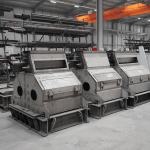
Pellet machine is a mechanical device that compresses raw materials in powder or solid form into pellets of a certain profile and size. It is generally used for animal feed, biofuel production, fertiliser processing and agricultural waste recycling.
Thanks to these machines, straw, wood shavings, feed raw materials or other organic materials are condensed and made more efficient and useful. It is widely used especially for feed production in the livestock sector and biomass pellet production in the renewable energy sector.
Working Principle of Pellet Machine
Pellet machines form pellets by compressing the material under a certain pressure. The working process consists of several basic steps. These steps are as follows;
- Raw Material Feeding: The material to be pelletised is put into the hopper located at the top of the machine. This hopper directs the powder or small particle raw material to the inside of the machine in a controlled manner.
- Crushing and Wetting Process: The raw material is compressed by means of crushing wheels (rollers). For the pelletising process to be successful, the material must be at a certain moisture level. At this stage, the machine can spray liquid to ensure the adhesion of the material.
- Pellet Forming: Crushing wheels form cylindrical pellets by passing the moistened raw material through perforated moulds (matrices) inside the machine. The diameter of these holes determines the size and shape of the pellets.
- Cooling Process: In the pelletising process, the temperature rises due to friction. In order to prevent overheating, there must be a cooling mechanism inside the machine. Otherwise, flammable materials, such as wood shavings, can overheat inside the machine and cause danger.
- Finishing and Storage: After cooling, the produced pellets are packaged and made ready for use.
Usage Areas of Pellet Machine
Pellet machines are used for different purposes in many sectors such as agriculture, animal husbandry and industry;
Livestock and Feed Production
Pellet machines play a major role in animal feed production. Feed raw materials (corn, barley, soya, wheat, cottonseed meal, etc.) are crushed or broken into pellets in accordance with the needs of animals.
Chicken, cattle, ovine and fish feed production
Homogenous distribution of vitamins and minerals
Providing a more balanced diet by preventing animals from selecting feed
Thanks to the pelleting process, the nutrients are evenly mixed, so that the animals receive the same nutritional value at each meal.
Biomass and Renewable Energy Production
Pellet machines make pelletising process for using agricultural wastes as fuel. In this way
Wastes such as wood shavings, straw, rice husks are converted into biofuel.
Fuels that can be used in domestic and industrial biomass stoves are produced.
Environmentally friendly energy is obtained by reducing carbon emissions.
Example: Wood pellets are among the renewable fuels used as an alternative to natural gas.
Organic Fertiliser Production
In the agricultural sector, animal wastes or vegetable wastes are converted into organic fertiliser and made ready for use by pelletising process.
Natural fertilisers that increase the nutritional value of the soil are produced.
Fertilisers become easier to transport and store.
It offers an environmentally friendly alternative to the use of chemical fertilisers.
Example: Chicken manure, cattle manure or biological waste can be pelleted and used as natural fertiliser.
Agriculture and Food Industry
Pellet machines are also used to utilise agricultural waste and support food processing.
Processing of cereals such as maize, wheat
Production of fattening feed and special feed
Integrated operation with machines used in flake feed production
It offers a solution that increases productivity in agricultural production, especially when integrated with barley flaking machines, feed crushers and feed mixers.
Advantages of Using Pellet Machine
There are many advantages of using a pellet machine;
Energy Efficiency: Pellets contain more concentrated energy because they are in a compressed form and burn more efficiently.
Ease of Storage: Instead of powdered raw materials, compressed pellets take up less space and can be stored longer.
Preservation of Nutritional Values: For animal feeds, nutrient loss is minimised and a homogenous mixture is obtained.
Waste Recycling: It offers an economical and environmentally friendly solution by utilising biomass and agricultural wastes.
Prevents Feed Selection: Provides maximum benefit from feed by providing healthier feeding of animals.
Conclusion
Pellet machines have a critical importance in many sectors such as animal husbandry, agriculture and biofuel production. These machines, which have a wide range of uses from feed production to biofuel, from organic fertilisers to industrial processes, offer great advantages in terms of efficiency, savings and sustainable production.
If you want to produce your own feed, utilise waste or produce biomass fuel, pellet machines provide you with great gains in terms of both cost and production in the long term. Yemsa Makina production pellet machines are used for from the link you can examine.